
Interspecies Working Groups
A collaborative space that moves interspecies communication research from isolated breakthroughs toward shared, interoperable infrastructure.
Open Hardware
✳︎
Ethics
✳︎
Vocabulary
✳︎
Data Repository
✳︎
Governance
Open Hardware ✳︎ Ethics ✳︎ Vocabulary ✳︎ Data Repository ✳︎ Governance
Each Working Group is a small team that works together on one concrete output for the field. The groups are built around key field requirements that surfaced during our NYC Climate Week session at Doris Duke Foundation.The five working groups
Group 1 | Interspecies Data Repository
Design the technical and operational infrastructure for a central, vetted interspecies data repository, including data standards, submission criteria, access permissions and safeguards for sensitive information.
Group 4 | Shared Vocabulary and Taxonomy
Map the field’s key terms, concepts and methods across disciplines. Develop a shared reference that clarifies meanings, makes differences explicit and supports collaboration across scientific, technical and other knowledge traditions.
Group 2 | Access and Benefit-Sharing Framework
Examine the relevance and limits of the Nagoya Protocol for interspecies data and develop principles for who benefits from its collection and use, including how benefits could support the animals, communities and ecosystems involved.
Group 5 | Open Hardware and Data Logging
Develop modular, open-source tools for collecting interspecies data in different environments. Prioritise animal welfare, adaptable sensors and consistent recording formats so equipment and datasets can work together across projects.
Group 3 | Ethics Toolkit
Bring together existing guidance for working with other species into a practical, searchable resource. Help researchers and practitioners compare approaches and apply relevant principles at each stage of a project.
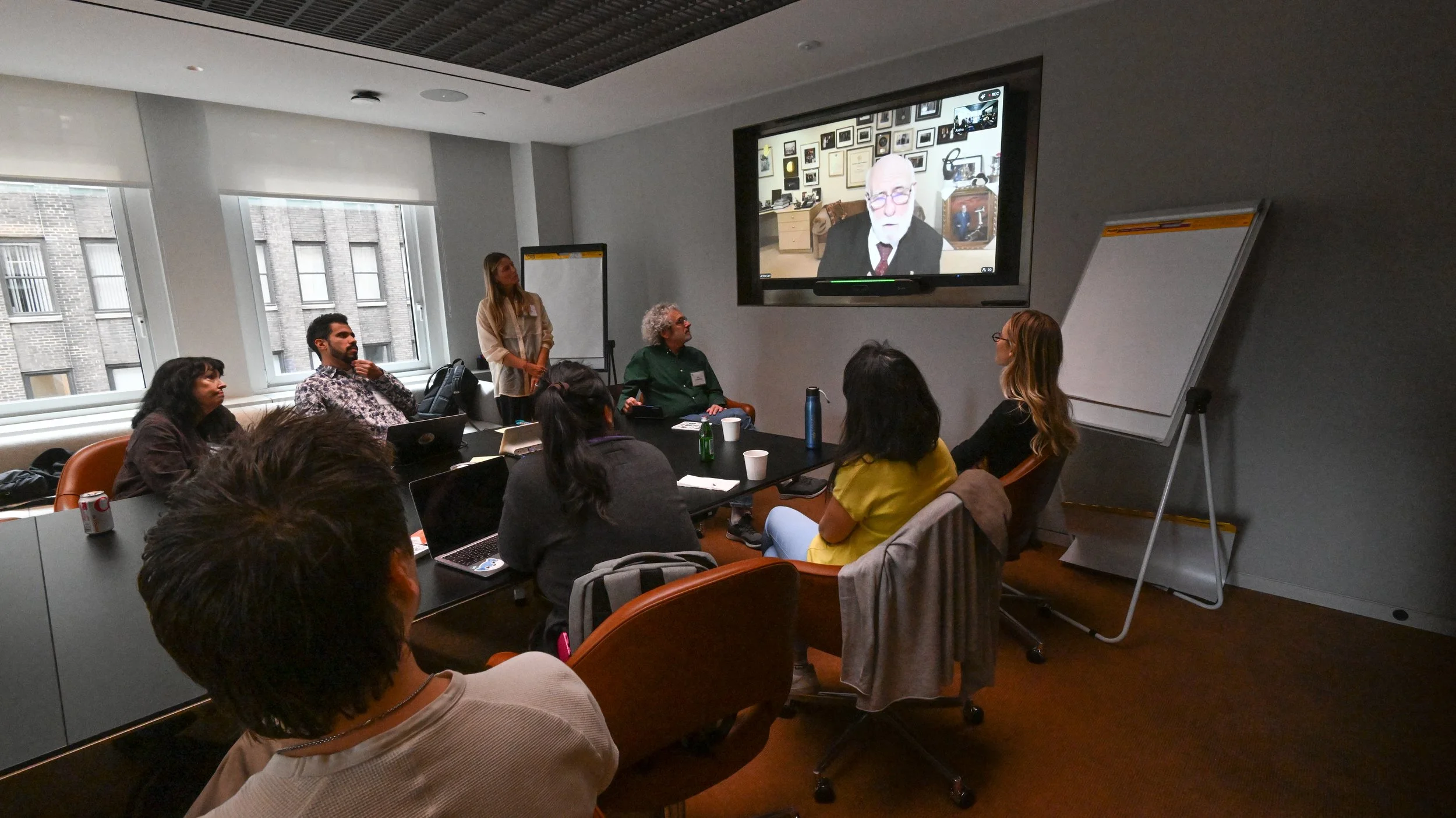
2026
Doris Duke Foundation
New York, USA
Read more about the 2026 Climate Week Session →
Why Interspecies Internet?
As a neutral nonprofit organisation supported by leading scientific and technical advisors, Interspecies Internet, rather than building competing technologies, seeks to strengthen the field by focusing on the network: supporting coordination, shared infrastructure, science translation and interdisciplinary collaboration.
The NYC Climate Week Session and the working groups that followed represent the first step in a broader programme to develop the technical, ethical, and organisational foundations for the future of interspecies communication.
Rather than using new technologies solely to decode communication, we ask: how might we build adaptive systems that enable more responsive interactions between humans, animals and broader living systems? What technical infrastructure, governance models and ethical safeguards will be required to make this possible?
These questions remain largely unexplored across the field and require coordinated interdisciplinary collaboration.
Doris Duke Foundation
New York, USA
Initiate a
Working Group
Complete the form with contextual information regarding your challenges, timelines, and desired outcomes, and our team will respond promptly with an evidence-based recommendation framework.