From Dolphins to Deep Space: Can Interspecies Communication Include Aliens?
by Kate Armstrong
Executive Director, Interspecies Internet

For decades, humanity has looked to the stars in search of signs of life beyond Earth. But through my work at Interspecies Internet, I’ve come to see that some of the most practical model systems for decoding alien intelligence already exist here on Earth, in the rich and complex vocal cultures of non-human animals.
Through our public convening and monthly lecture series, our community has shown that animal communication research deserves a place within space science programs. Fields like astrobiology, exobiology, biosignature detection and even efforts to understand signals from exoplanets would benefit from the insights, tools, and interfaces developed through decoding non-human intelligence.
Building an 'interspecies internet' doesn’t just expand our understanding of other species; it also builds the technical and conceptual foundations for communicating across worlds.
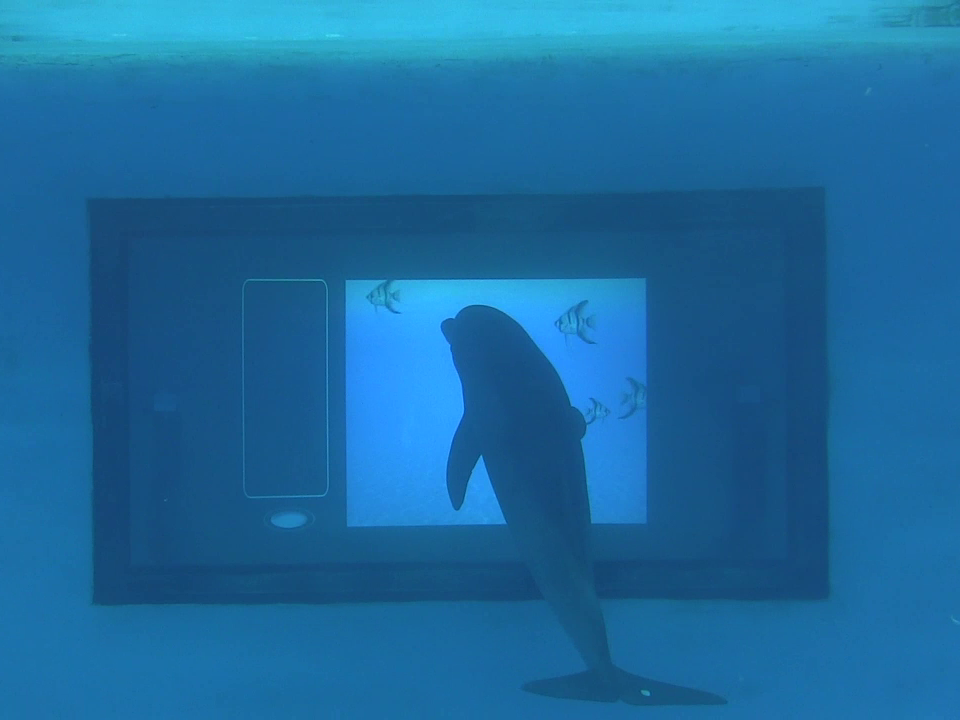
Projects like Project CETI, Earth Species Project, MICO: The Massive Interspecies Communication Observatory and our own work at Interspecies Internet are advancing AI-powered decoding and interface design to enable meaningful interactions with animals. These efforts offer more than insights into animal minds; they provide concrete testbeds for developing the tools we may one day need to interpret signals from beyond Earth.
This idea is beautifully mirrored in the film Arrival, based on Ted Chiang’s Story of Your Life, where the protagonist builds an interface with a wildly different type of intelligence. We were honoured to host Ted Chiang as part of our Animals in Translation workshop at the Santa Fe Institute in 2024, alongside contributors like Dr. Laurance Doyle from the Whale-SETI Group.
Dr. Doyle’s work leading the Whale-SETI Group connects the dots between non-human Earth communication and the search for alien intelligence. Animals like whales exhibit complex dialogue patterns, such as vocal turn-taking and rhythmic matching, across distances. These behaviours resemble core principles used in signal-interpretation frameworks within SETI (Search for Extra-Terrestrial Intelligence).
Using tools from information theory like Zipf’s Law and Shannon entropy, Doyle explained that the same statistical structures found in human language also appear in dolphin and whale communication. These shared patterns may represent universal markers of intelligence. Whether the source is a humpback whale, a cotton plant, or an alien probe, recognizing these signatures gives us a framework for identifying intelligent communication, without needing to first understand the language.
Alien Minds: Octopus Intelligence
One of the most-viewed videos on the Interspecies Internet YouTube channel is 'Octopuses as Intelligent Aliens from Space: What?' delivered by cephalopod expert Dr. Jennifer Mather. The evocative title aimed to highlight the distinct nature of octopus communication systems, which seem to be otherworldly.
“Their intelligence is different and separate from that of the mammals that we know well. But is that any reason to declare them aliens and decide they came from outer space? This presentation looks at the evidence.”
— Dr. Jennifer Mather, “Octopuses as Intelligent Aliens from Space, What?”
The lecturer did an amazing job at highlighting the opportunity that Whale-SETI is pursuing. Describing octopus cognition as 'alien' challenges us to broaden our frameworks for how intelligence can emerge, whether on Earth or across galaxies.


Should Space Agencies Support Animal Communication?
I may be biased, but I believe there is a high level of opportunity for space agencies to fund animal communication research, technical development, and exploration of the domain's ethical implications as part of their long-term funding agenda. A few ideas are below:
☑️ Proof of concept
Earth’s non-human communication systems offer the best analogue we currently have for extraterrestrial signalling.
☑️ Interface development sandbox
Designing two-way systems to communicate across species builds a foundation for future alien interface platforms.
☑️ Ethical foresight
Our treatment of non-human intelligences here will shape how we engage with potentially conscious beings beyond Earth. Our Animals in Translation publication, along with research into whale song syntax and octopus problem-solving, offers frameworks that can align with space science missions. Animal communication is not a parallel interest—it is essential to the way we imagine planetary intelligence.
Please reach out if this interests you, or if you have any ideas about funding opportunities or collaborations regarding:
Astrobiology or exoplanet life detection
AI and linguistic interface design
UX for speculative technologies
Science policy or planetary ethics
…it’s time to integrate animal communication into the narrative of space science.
Let’s build the bridge between Earth’s intelligences and extraterrestrial possibilities!