From Cacophony to Communication
with Yossi Yovel
22 August 2026, 16:00 GMT/ 12:00 EDT/ 09:00 PDT
From Cacophony to Communication — Challenges in Decoding Animal Vocalizations
As interest in applying artificial intelligence to animal communication continues to grow, the prevailing approach has been to cluster signals based on their physical similarity—for example, using acoustic features for vocal communication—under the implicit assumption that similarity in physical feature space approximates similarity in perceptual space. However, this assumption may be fundamentally flawed.
Decoding communication requires identifying meaningful units, uncovering combinatorial structure, and inferring meaning, yet these operations are biologically meaningful only within the receiver's evolved perceptual space. Consequently, clustering signals in physical feature space without behavioral or physiological validation may produce biologically irrelevant categories. Yossi Yovel will illustrate this gap using pre-linguistic human toddler vocalizations, one of the few non-linguistic human communication systems for which we have partial access to the receiver’s perceptual space.
Prof. Yovel will show that vocalizations that cluster robustly in human perceptual space fail to cluster when analyzed solely based on acoustic (spectrotemporal) similarity. Conversely, vocalizations that appear acoustically similar may be perceptually and functionally distinct, as demonstrated by behavioral studies. Finally, Prof. Yovel will describe how he and his team are attempting to overcome this dissociation in their work on social vocal communication in fruit bats.
About the Speaker
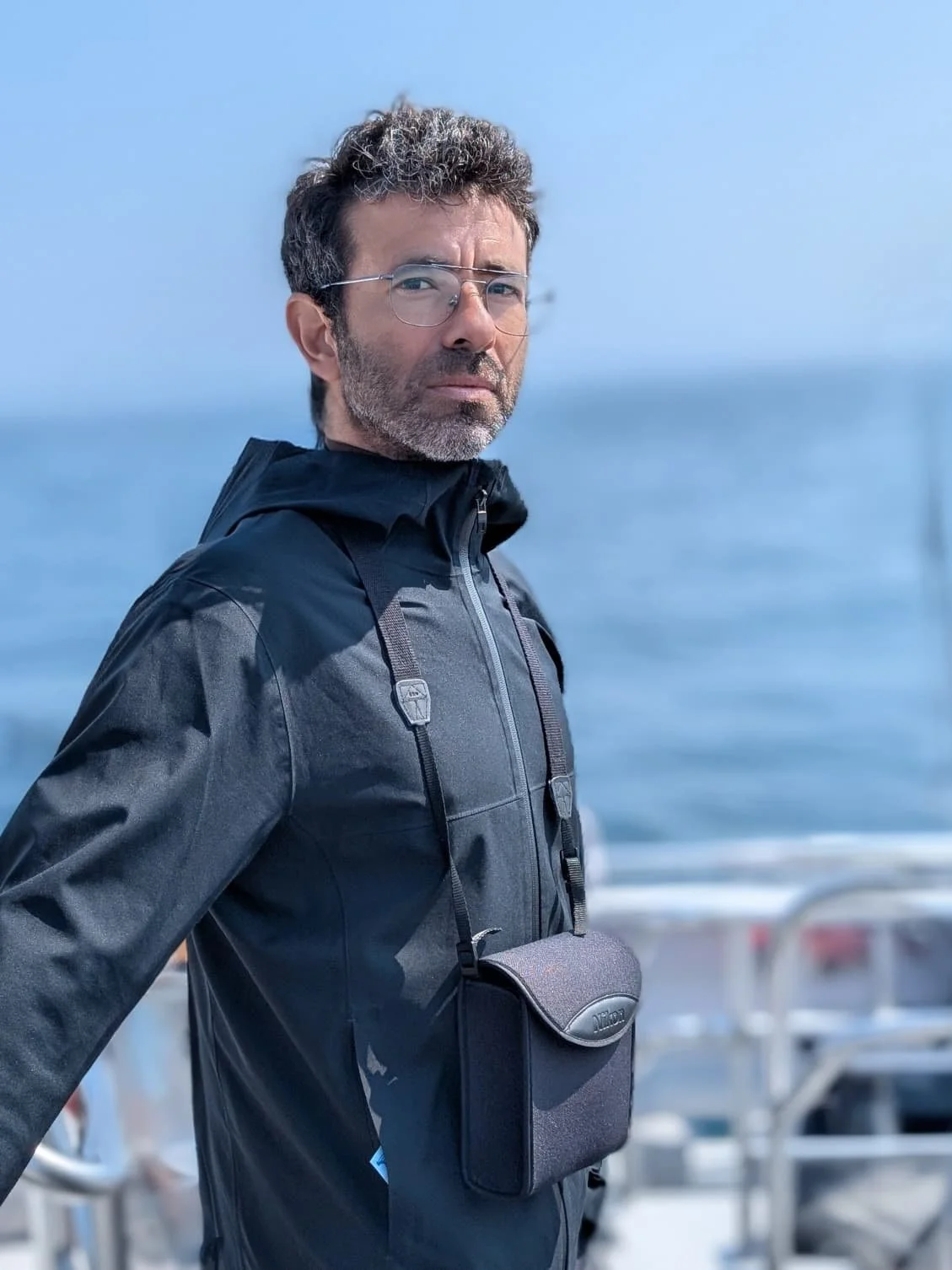
Prof. Yossi Yovel is a professor and the head of the NeuroEcology lab at Tel Aviv University, and the former head of the School of Neuroscience. Yovel, an ecologist and a neurobiologist, has been studying bats for the past 20 years and is passionate about deciphering their secrets, including using AI to decipher their communication.
He is the head of the scientific committee of the Dolittle Prize, which aims to use AI to reveal what animals say. His research combines biology with technology. As part of his work on bat bio-sonar, he developed of a bat-like robot that navigates autonomously using sound only. His work on bat navigation drove the development of miniature GPS sensors that allow tracking of the smallest animals ever tracked, including 7-gram bats. His interest in the bat brain drove him to develop a non-invasive MRI-based approach to study how the bat’s brain responds to natural sounds.
In his recent book - The Genius Bat, he brings to vivid life these amazing creatures as well as the obsessive and sometimes eccentric people who study them–bat scientists. From muddy rainforests to star-covered night deserts, from guest houses in Thailand to museum drawers full of fossils in New York, this is an eye-opening and entertaining account of a mighty mammal.